Dongguan Hetair Intelligent Equipment Co., Ltd.
Search

How Closed-Loop Flow Control Reduces Paint Waste in Automated Spraying Applications

Paint waste remains one of the most common efficiency challenges in industrial spray coating operations. In automated manufacturing environments, unstable paint flow can lead to overspray, uneven coating thickness, excessive material consumption, and costly rework. These issues not only increase production costs but also affect coating quality and operational stability.

As manufacturers continue adopting robotic spraying and intelligent production systems, precision fluid management has become increasingly important for improving transfer efficiency and reducing unnecessary paint usage. A closed-loop flow control system is an automated regulation system that continuously monitors actual fluid output and dynamically adjusts flow delivery to maintain a stable target flow rate during operation.

Modern spray applications rely heavily on real-time monitoring and rapid response flow adjustment to maintain coating consistency across changing production conditions. Accurate flow regulation is now considered a key factor in reducing paint waste while supporting stable automated manufacturing.


HT-Flo闭环流量控制系统(1).png


Why Paint Waste Is a Major Challenge in Automated Spraying

Paint waste in automated spraying systems is often linked to unstable fluid delivery and inconsistent spray performance. Even small fluctuations in paint flow can affect atomization quality and coating thickness, leading to unnecessary material consumption.

Several operational problems commonly contribute to paint waste:

  • Overspray caused by unstable atomization

  • Inconsistent coating thickness across surfaces

  • Excessive paint consumption during production

  • Increased rework and correction costs

According to the U.S. Environmental Protection Agency (EPA), transfer efficiency losses during spray coating operations can significantly increase coating waste and volatile organic compound (VOC) emissions in industrial finishing processes.

In high-volume production environments, these losses become increasingly expensive over time. Manufacturers operating robotic coating systems must also maintain stable spray performance at varying movement speeds, which increases the importance of responsive flow control technology.

Without stable regulation, coating quality may vary between production cycles, resulting in additional paint consumption and reduced finishing consistency.


Common Causes of Paint Flow Instability in Spray Systems

Paint flow instability can originate from several operating conditions within industrial spray systems. Variations in pressure, coating viscosity, and system response time can all influence spray quality.

The table below summarizes several common causes of spray flow instability.

CauseImpact on Spray Performance
Pressure fluctuationsUneven atomization and unstable coating thickness
Viscosity changesIrregular paint delivery
Inconsistent discharge ratesVariable coating coverage
Delayed response timeOverspray and coating defects

Paint viscosity can change during production due to temperature variation or material formulation. Water-based and solvent-based paints may also respond differently to pressure changes, making stable flow management more difficult in conventional systems.

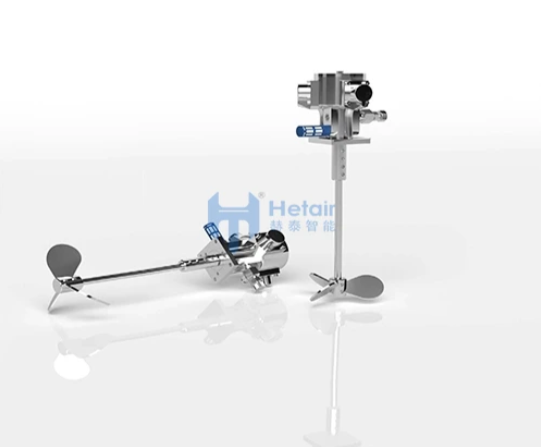
In many traditional spray operations, delayed response time allows coating inconsistencies to continue before manual corrections can be made. Automated production lines require faster compensation capability to maintain coating stability throughout continuous operation. The HT-PDFlo Metering Cylinder (Precision Fluid Control) helps address this challenge by enabling accurate, closed-loop fluid regulation and rapid response to process variations, resulting in improved coating consistency, reduced paint waste, and enhanced production efficiency.


How Closed-Loop Flow Control Maintains a Stable Target Flow Rate

Closed-loop flow control technology continuously measures actual paint flow and automatically adjusts fluid delivery to maintain a stable target flow rate.

The hetair HT-Flo Closed-loop Flow Control System uses integrated flow monitoring and feedback control to dynamically regulate coating output during operation. Instead of relying on fixed manual settings, the system continuously responds to changing production conditions in real time.

Its operating process includes:

  • Real-time flow monitoring

  • Continuous feedback correction

  • Dynamic flow adjustment

  • Stable discharge rate maintenance

This control method helps reduce flow instability caused by pressure variation or viscosity changes during spray applications.

By maintaining a more consistent spray output, the system helps manufacturers improve coating uniformity while reducing unnecessary paint consumption. Stable target flow regulation is particularly important in robotic spray systems, where rapid movement changes can affect coating delivery if fluid response is delayed.

Benefits of Real-Time Flow Monitoring in Spray Coating Operations

Real-time flow monitoring provides measurable production data that can be used to improve coating efficiency and process consistency.

The HT-Flo system supports several monitoring functions, including:

  • Instantaneous flow data analysis

  • Cumulative paint consumption tracking

  • Discharge volume monitoring

  • Production optimization support

Continuous flow visibility allows manufacturers to compare theoretical coating usage with actual paint consumption during production. For example, cumulative flow tracking can help identify areas where overspray or unstable discharge is increasing material usage. Operators can then make targeted process adjustments to improve coating efficiency and reduce waste. This data-driven approach also supports intelligent coating management in automated manufacturing environments where repeatability and quality control are critical.


Reducing Overspray and Material Waste with Precision Fluid Control

Overspray is one of the largest contributors to paint waste in industrial spraying applications. When fluid delivery becomes unstable, atomization quality can deteriorate, causing excessive coating material to miss the target surface. Precision flow control helps reduce these losses by stabilizing paint delivery throughout the spraying process.

The table below outlines several operational benefits of precision fluid control.


Improvement AreaProduction Benefit
Lower paint consumptionReduced material costs
Improved transfer efficiencyBetter coating utilization
Reduced coating defectsLess rework and correction
Stable spray outputImproved production consistency

According to EPA coating efficiency studies, improving transfer efficiency can significantly reduce both coating waste and environmental emissions during industrial finishing operations.

Stable spray regulation also helps reduce uneven film thickness, which can otherwise increase sanding, repainting, or corrective finishing work. For large-scale automated spray lines, even small improvements in coating efficiency can create measurable long-term cost savings.


Supporting Robotic and Automated Spray Applications

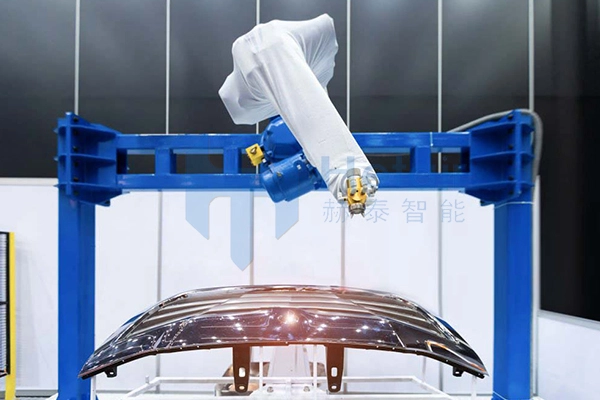
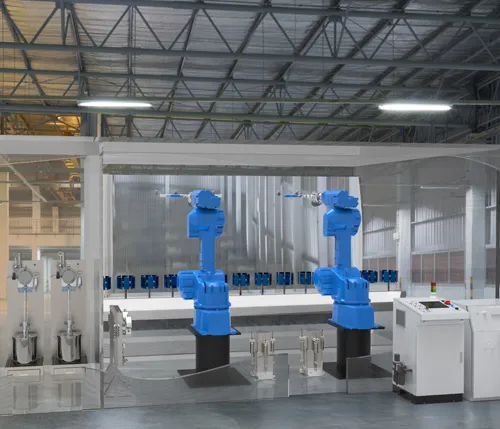
Modern robotic spray systems require fast-response flow control to maintain coating consistency during continuous movement. In automated production environments, robotic arms often change speed and spray position rapidly while maintaining precise coating patterns. Delayed flow adjustment can lead to unstable atomization and uneven coating distribution.

The hetair HT-Flo system supports robotic integration through:

  • Compact flow control modules

  • Faster response times

  • Reduced setup workload

  • Improved operational stability

Installing flow control modules closer to spray guns also helps minimize adjustment delay during high-speed coating operations. This configuration improves spray responsiveness while reducing the need for excessive manual calibration during production setup.


Why Precision Flow Control Is Essential for Water-Based and Solvent-Based Paints

Different coating materials behave differently during spray applications. Water-based and solvent-based paints can vary significantly in viscosity, atomization characteristics, and flow stability requirements.

The HT-Flo system supports coating viscosities ranging from 20 to 5000 cps, allowing manufacturers to maintain stable spray performance across multiple coating materials.

Precision flow control is important for several reasons:

  • Compensating for viscosity variation

  • Maintaining stable flow consistency

  • Improving coating quality stability

  • Supporting multiple paint formulations

Without accurate regulation, viscosity variation can affect discharge rates and atomization quality, increasing the risk of coating inconsistency and paint waste. Stable flow management helps manufacturers maintain more repeatable spray performance while adapting to different coating materials and operating conditions.


Data-Driven Production and Smart Coating Management

Modern manufacturing facilities increasingly rely on production data to improve operational efficiency and quality management. The HT-Flo system supports continuous data logging without requiring additional recording equipment. Operators can access real-time spray flow information, including instantaneous flow data, cumulative paint usage, and discharge volume measurements.

This supports several intelligent manufacturing objectives:

  • Data-driven process optimization

  • Improved production traceability

  • Reduced manual adjustment workload

  • Smart factory integration

As Industry 4.0 technologies continue developing, real-time coating data is becoming increasingly valuable for automated production management.

Combining precision fluid control with intelligent monitoring allows manufacturers to build more stable and efficient spray coating operations while reducing unnecessary paint consumption.


Conclusion

Closed-loop flow control technology helps manufacturers reduce paint waste by maintaining stable fluid delivery during automated spraying operations. The HT-Flo system improves coating consistency, reduces overspray, and supports more efficient production across robotic and industrial spray applications.


FAQ

How does closed-loop flow control reduce paint waste?

Closed-loop flow control continuously monitors paint flow and automatically adjusts fluid delivery to maintain a stable target flow rate, helping reduce overspray and uneven coating distribution.

What causes overspray in automated spraying systems?

Overspray is commonly caused by unstable atomization, pressure fluctuations, delayed response time, and inconsistent paint flow during spraying operations.

What is the advantage of real-time flow monitoring?

Real-time monitoring provides continuous spray performance data, allowing operators to optimize coating efficiency, reduce paint waste, and improve process consistency.

Can precision flow control improve coating consistency?

Yes. Stable fluid regulation helps maintain consistent coating thickness, atomization quality, and transfer efficiency during production.

Is HT-Flo suitable for robotic spray systems?

Yes. The HT-Flo Closed-loop Flow Control System supports robotic spraying applications through rapid response adjustment and stable flow regulation.


References

  1. Wikipedia – Closed-loop Controller
    https://en.wikipedia.org/wiki/Closed-loop_controller

  2. U.S. Environmental Protection Agency (EPA) – Spray Application and Coating Efficiency
    https://www.epa.gov

  3. Wikipedia – Spray Painting
    https://en.wikipedia.org/wiki/Spray_painting

  4. National Institute of Standards and Technology (NIST) – Smart Manufacturing
    https://www.nist.gov/topics/smart-manufacturing


Explore More Hetair Automatic Paint System and Robot Products


Latest News about Hetair
ht@hetaircn.com
+86-0769-85395351
We use cookies on this site, including third party cookies, to delivery experiennce for you.
Accept Cookies
Read Privacy Policy